Cut Recruiter Hours: Replace Phone Screens With AI for 30–40% of Jobs

Yes, for high-volume roles with a stable rubric, automate the first-pass screen. For senior, high-touch, or brand-critical roles, keep a live conversation. The right move is a narrow pilot: pick one or two qualifying roles, run automated screens alongside your existing process for a few weeks, and compare completion rates, shortlist quality, and time saved before you commit further.
TL;DR:
- Automated screening is most suitable for high-volume, stable-role, entry-to-mid level positions where candidates expect digital-first processes and the rubric remains consistent.
- Risks like bias and regulatory compliance can be managed through regular audits, maintaining transparency, and ensuring human oversight in adverse decisions.
- Roles that depend on relationship-building or technical verification, such as enterprise sales or specialized engineering, generally do not qualify for automation.
- Using a role-specific, domain-tailored platform like Resyme.ai can help meet rubric stability, explainability, and candidate experience criteria for effective automation.
Table of Contents
- When Is It Right to Replace Phone Screens With Automation?
- How Do You Pilot an Automated Phone Screen?
- What Risks Come With Automated Phone Screening, and How Do You Mitigate Them?
- How Does Resyme.ai Fit the Automation Decision Framework?
- A Practitioner’s Take on Automating the First Screen
- Start a Pilot That Actually Tells You Something
- Sources
When Is It Right to Replace Phone Screens With Automation?
Not every role belongs on an automated screen, and pretending otherwise is how pilots fail before they start. Five factors decide whether a role is a good candidate: monthly applicant volume, seniority level, how stable the evaluation rubric is, how much your employer brand pulls candidates toward you (versus you chasing them), and the cost of losing a good candidate to drop-off.
Score each factor with a simple yes or no. High volume (50+ applicants a month for one requisition)? Yes. Rubric-stable role where the same three or four competencies matter every time? Yes. Individual contributor or entry-to-mid level? Yes. Strong employer brand where candidates tolerate a bit of friction to get in the door? Yes. Low cost if a strong candidate drops out because the process feels impersonal? Yes.
A useful working threshold: if a role scores “yes” on three or more of these five factors, automate the first pass. If it scores “yes” on one or two, keep the live screen and use automation only for scheduling or pre-qualification questions.
- Customer support, retail, warehouse, and call-center roles usually qualify. Volume is high, the rubric barely changes month to month, and candidates expect a fast, digital-first process.
- High-volume operations and seasonal hiring qualify almost by default. The math on recruiter hours saved is too favorable to ignore.
- Director-level and above rarely qualify. The rubric shifts with every search, and the relationship-building a live conversation does cannot be replicated.
- Roles that depend on closing candidates, like enterprise sales or specialized engineering in a tight market, usually do not qualify. Employer brand pull is often weaker here, so friction costs you talent.
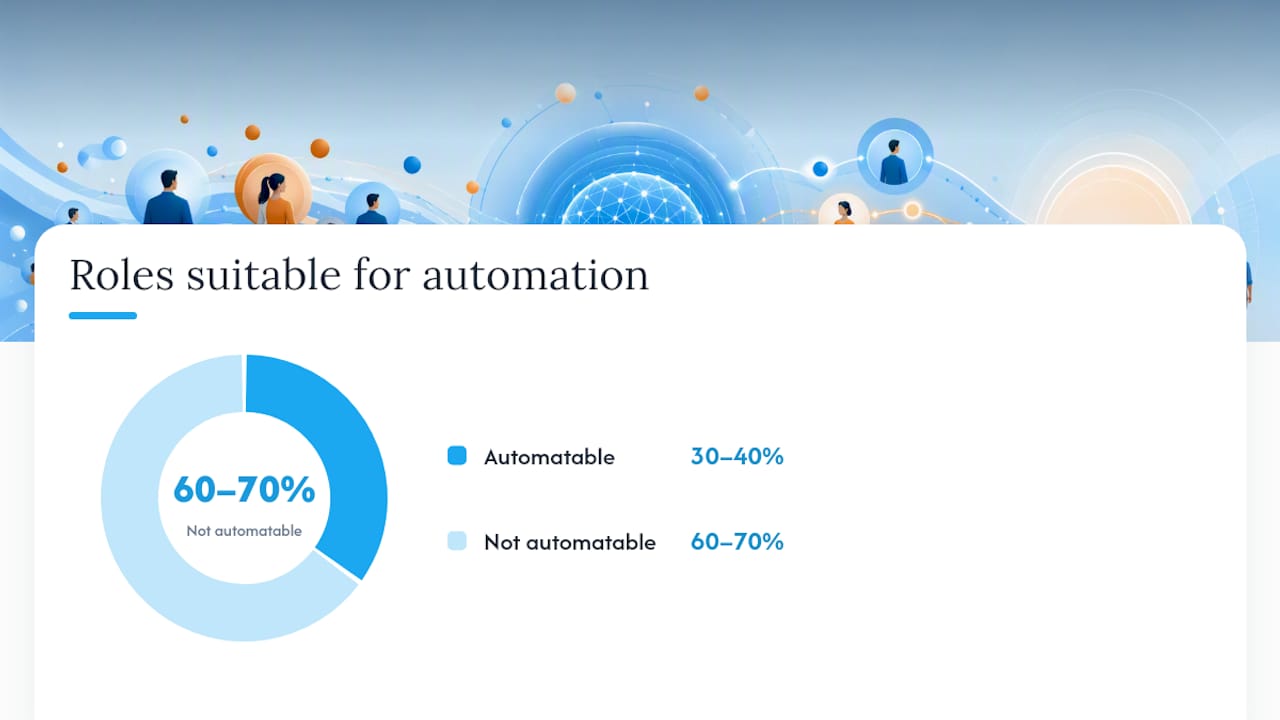
Pro Tip: Run the five-factor score on your last twelve months of requisitions before you pilot anything. You will likely find that 30 to 40 percent of your roles already meet the automation threshold, which tells you the size of the opportunity before you spend a dollar on tooling.
How Do You Pilot an Automated Phone Screen?
A pilot should answer one question cleanly: does automating the first pass produce a shortlist as good as, or better than, your current process, at lower cost and less recruiter time? Structure it as a controlled comparison, not a wholesale switch.
- Pick one or two roles that scored “yes” on three or more decision factors, ideally something you hire for continuously so you get volume fast.
- Write and lock a rubric with your hiring managers before the pilot starts. Every question the automated interview asks should map to a competency on that rubric.
- Configure the interview format for mobile completion, keep it under 15 to 20 minutes, and allow candidates to re-record an answer if they stumble.
- Disclose AI use clearly in the invitation, and give candidates a human contact for questions or accommodation requests.
- Run it in parallel with live screens for a control group, ideally 50 to 100 candidates per arm, over four to six weeks.
Track five numbers throughout: completion rate, recruiter hours saved per week, hiring manager pass-through rate on the resulting shortlist, candidate satisfaction (a short post-interview survey works fine), and pass-rate variance across demographic groups. If completion rate stays within a reasonable range of your live-screen show rate and hiring managers advance candidates from the automated shortlist at a comparable or better rate, you have your green light to scale.
Expect drop-off to be real. Some buyer research on automated interview platforms points to non-completion rates of 20 to 40 percent in certain contexts, so build that into your funnel math before you promise leadership a faster time-to-fill. On the upside, enterprise deployments at companies replacing phone screens with AI interviews have reported screening cost reductions of 60 to 75 percent for roles that fit the profile, with time-to-first-human-interview shrinking from weeks to days.
Keep the reviewer workflow human-friendly: recruiters should see transcripts, scores, and flagged answers in one place, integrated with your ATS, so nobody loses the context that used to live in a phone call.

What Risks Come With Automated Phone Screening, and How Do You Mitigate Them?
Bias is the first risk, and it is manageable if you treat rubrics as living documents. Score consistency improves when interviews follow a documented, weighted rubric rather than an unstructured conversation, but that only holds if someone audits pass-rate variance across demographic groups on a regular schedule, not once at launch and never again.
Regulatory exposure is the second. Employment decisions made or influenced by automated systems increasingly require an explainable, auditable trail. Guidance on explainable AI is explicit about this:
Automated decision systems should maintain records that allow a human reviewer, and eventually a regulator, to understand why a specific score or outcome was produced, not merely that it was produced.
That means keeping a human in the loop for every adverse action, exporting the reasoning behind a rejection, and never letting a vendor score stand in for an explainable decision. The EU’s guidance on explainable AI is a useful reference point even outside Europe, because it lays out the auditability standard regulators elsewhere are converging toward.
Deepfakes and proxy interviews are a newer worry, especially for technical or high-security roles. Treat voice and text analytics as signals that flag a conversation for review, never as an automatic reject, and add a short live verification step for sensitive hires.
Candidate experience is the risk most likely to quietly sink your numbers. Disclose AI use up front, keep a human reachable, and close the feedback loop within days, not weeks.
- Audit pass-rate variance across protected groups every quarter, not just at pilot launch.
- Keep human sign-off on every rejection tied to an automated score.
- Reserve live verification for roles where identity or technical proof genuinely matters.
- Send rejection or advancement feedback within 72 hours to protect completion rates on future roles.
Pro Tip: Publish your rubric summary to hiring managers before the pilot starts, not after. Disagreements about what the tool should be measuring are far easier to resolve on paper than after 200 candidates have already gone through it.
How Does Resyme.ai Fit the Automation Decision Framework?
Resyme.ai was built around the same checklist recruiters should already be running: role-tailored questions instead of a generic script, behaviorally-anchored follow-ups instead of yes-or-no boxes, and honesty and integrity validation layered into the interview itself rather than bolted on afterward. That combination targets the two failure modes covered above directly, rubric drift and unexplainable scoring, by grounding every question in domain-specific criteria rather than a one-size-fits-all template.
For the volume side of the equation, Resyme.ai lets recruiters compare candidates objectively against the same rubric at scale, which matters most for the high-volume, rubric-stable roles identified earlier in the decision framework. Integration with resumes and LinkedIn profiles keeps the reviewer workflow inside a single view instead of scattered across tools.
| Framework requirement | How Resyme.ai addresses it |
|---|---|
| Rubric-stable, high-volume roles | Role-tailored, domain-specific question sets |
| Honest, verifiable candidate signal | Built-in honesty and integrity validation |
| Explainable, comparable shortlist | Objective candidate comparison and scoring |
| Candidate experience safeguards | Accessible interview format designed for completion |
Starting a trial means configuring one role, applying a documented rubric, and measuring completion rate and shortlist quality against your existing screen for a few weeks, the same pilot structure outlined earlier in this guide. Visit Resyme to see how the platform maps to your specific hiring volume before committing further.
A Practitioner’s Take on Automating the First Screen
Automation earns its place when it removes the seventh identical scheduling call of the week, not when it replaces the judgment that actually separates two similar candidates. That distinction gets lost fast once a tool starts saving hours, and recruiters start pushing it into roles it was never built for.
The teams that get this right redesign the recruiter’s job alongside the tool. Fewer hours on logistics, more hours on finalist conversations, manager calibration, and closing offers. Skip that redesign and you end up with an automated funnel feeding into the same overloaded, under-supported recruiting team, which helps nobody.
— Raul
Start a Pilot That Actually Tells You Something
A well-run pilot answers one question in a few weeks: does automating this screen save real recruiter hours without costing you candidate quality or drop-off you cannot afford? Watch completion rate, hiring manager pass-through, and time saved from day one, and you will know within a month whether to scale or stop.

Getting started means picking a role, agreeing a rubric with your hiring manager, and configuring an interview candidates can finish on a phone between shifts. The platform’s role-tailored questions and honesty validation support this kind of measured rollout, whether testing one requisition or several at once. Visit Resyme to configure your first pilot role and see what your current screen is actually costing you in hours and drop-off.